
Stage sets vs truss is the question planners ask when a drawing shows both aluminum chords and lit scenic. Short answer: truss is the structure; stage sets are the finished look. Understanding stage sets vs truss helps you build one clear AVLS Rentals quote that covers both.
Stage sets vs truss in one sentence
In the stage sets vs truss decision, truss holds span, height, and hang points. Stage sets—cubes, bars, arches, and similar scenic—create the branded surface and lighting moments. You rent truss when the plot is mostly lighting or LED. You rent stage sets when the scenic itself is the design.
When stage sets vs truss means you need both
Most corporate stages and exhibit booths need both sides of the stage sets vs truss choice. A goalpost or tower in 12×12 box truss carries lights or banners; illuminated cubes or bars dress the face. Ordering them together from AVLS keeps connectors, packing lists, and freight aligned. Browse stage sets and truss rental side by side.
- Trade-show booth: truss frame + lit cube or bar scenic
- Festival activation: towers or arches + illuminated scenic walls
- Ballroom stage: overhead truss grid + front-facing set pieces
- Photo moment: free-standing scenic with optional truss support
How to mark a sketch for stage sets vs truss
- Circle every piece that is only structure or hang space → truss
- Circle every piece guests photograph as the brand look → stage set
- Note power for LED scenic and who runs cable
- Confirm ground-supported bases vs building hang points
FAQ: stage sets vs truss
Is one cheaper than the other?
It depends on size and finish. Bare truss is often less scenic cost; finished stage sets add visual value. Compare stage sets vs truss on the same plot rather than price alone.
Can AVLS quote both on one order?
Yes. That is the usual path for nationwide shows.
Send city, dates, and the sketch. Request a quote or call (773) 457-3544. Read the stage set rental guide, illuminated stage set rental, and 12×12 box truss rental guide.
Production notes before choosing the structure
Mark the desired scenic sightline, lighting positions, and every point that must remain clear for guests. A truss tower may need ballast and a larger footprint than a scenic cube, while a finished set piece may need dedicated circuits or a control plan. Share these notes with the rental team so the quote accounts for bases, freight, packing, and venue rules instead of treating a sketch as a complete bill of materials.
For power and temporary-event safety planning, review the National Fire Protection Association resources alongside the venue handbook. Then confirm whether the show needs a ground-supported frame, scenic-only pieces, or a coordinated package with both elements.
Include the audience path, camera angles, and clearances in the sketch. These details help the production team decide whether scenic should sit in front of a frame, inside a booth footprint, or stand independently. Confirm base plates, ballast, cable paths, and packing dimensions before the order is finalized so the installation plan matches the venue and freight schedule.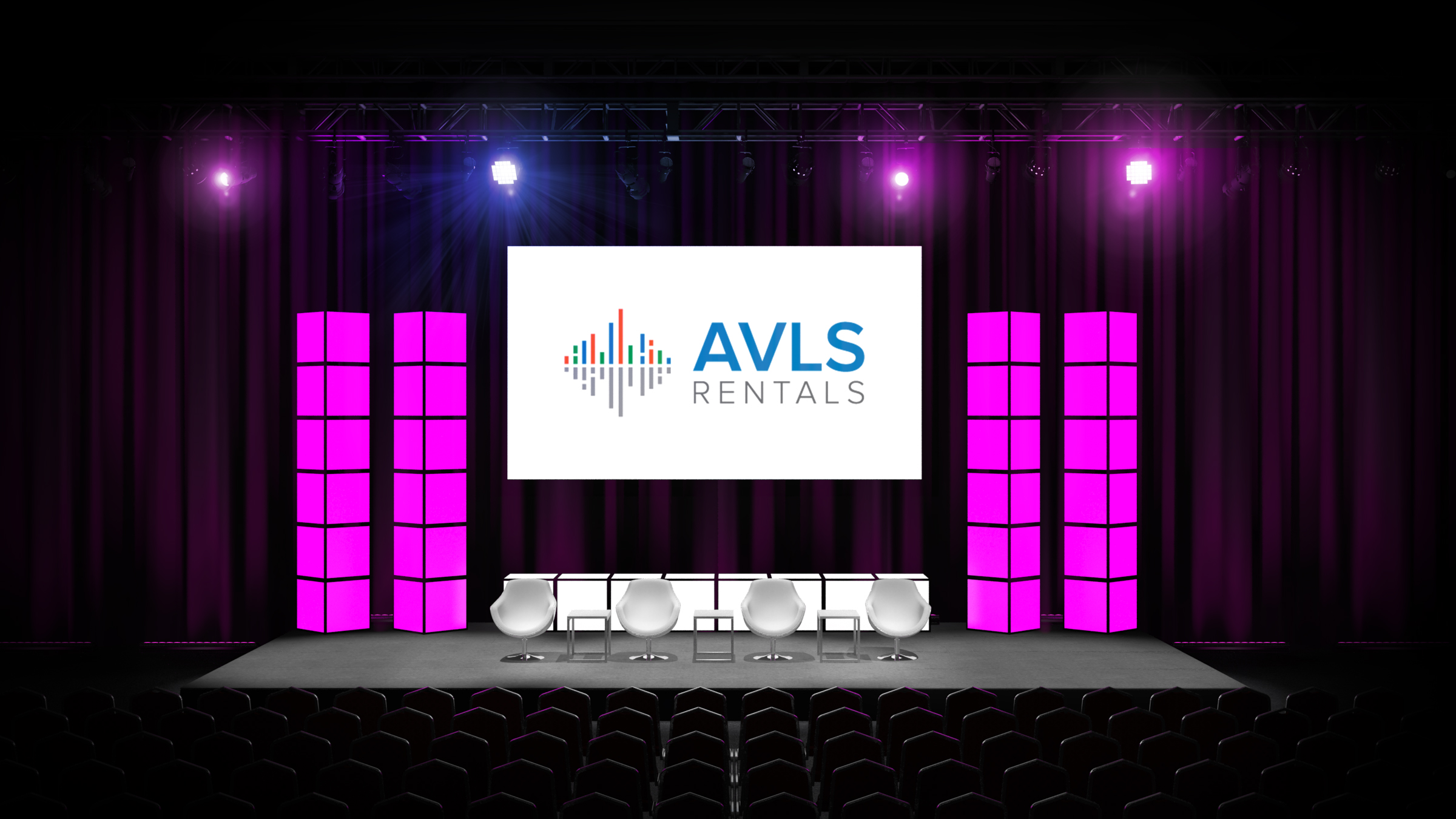
Include audience path, camera angles, and clearances in the sketch. These details help the production team decide whether scenic should sit in front of a frame, inside a booth footprint, or stand independently. Confirm base plates, ballast, cable paths, and packing dimensions before the order is finalized so the installation plan matches the venue and freight schedule.
Ask about venue access, load-in timing, ceiling limits, and the return plan. A concise production brief lets the rental team verify scenic dimensions, truss span, ballast, power distribution, and freight together. This reduces last-minute substitutions and keeps the finished stage sets vs truss design consistent from drawing through strike.